
Europe’s Witch Fever: Witches Today and Witches of the Past
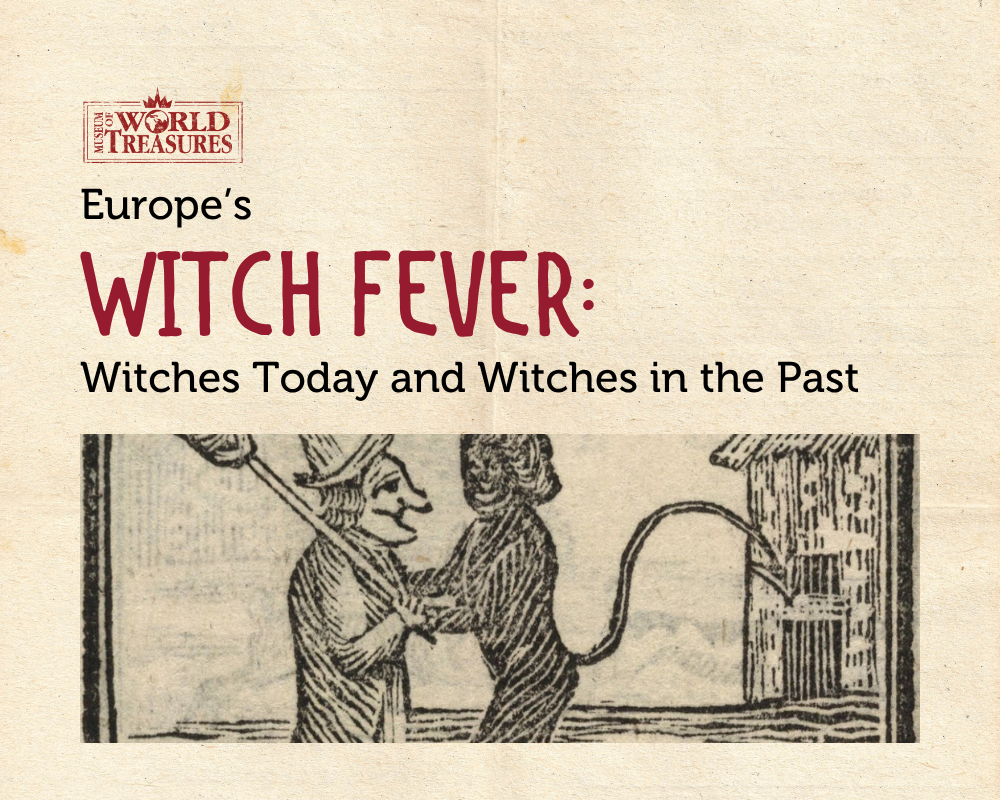
What do you think of when you think of a witch? Perhaps it’s an older lady, a crone or hag, wearing black with a wide brimmed and pointed hat riding a broom or stirring a cauldron. This is a pretty standard mental image for people, and witches are depicted as such in movies, TV, Halloween costumes, and various other forms of media.
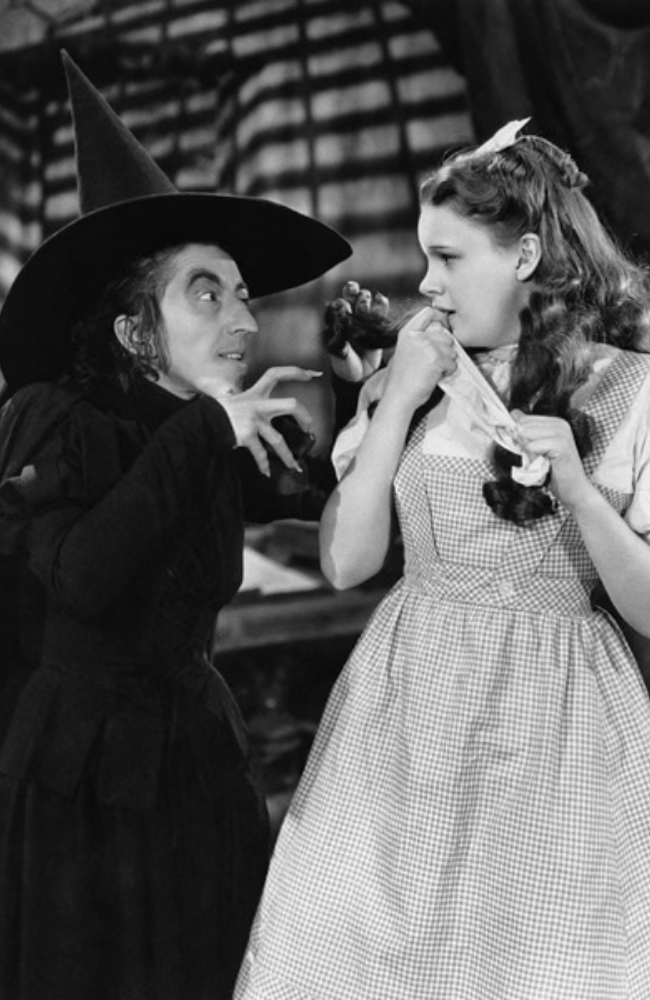
Margaret Hamilton’s depiction of the Wicked Witch of the West in MGM’s The Wizard of Oz (1939) is for many the stereotypical presentation of a witch, black dress and hat with the broom!
Today’s witch is mostly devoid of the danger that has accompanied them in the centuries prior. This danger led to fear and the deaths of thousands in Europe’s early modern period (about 1400-1775).
Scholars and academics estimate that around 50,000 men and women were executed for witchcraft in over 100,000 trials. Of those estimated 50,000 executions, 75%-80% of them are women. So, what caused 50,000 people to be executed in this nearly 400-year period?
After doing some extensive reading, I have an answer for you my dear reader. Witch trials in this era acted as a way for the general populace to process and react to the large scale political and religious systems around them changing. And these systems changed rapidly and aggressively. Consider this, for the thousand years before 1400, the life of your average European peasant or townsfolk was unchanged for generations. You did the work that your parents did before you, who did the same work as their parents before them, and theirs before them. And all of you were (most likely) Roman Catholic Christians. Beginning in the 15th century these changes, in religious, political, and economic systems made the world a very different place over the next 400 years.
This blog will then be split into 3 separate posts. This first one digs into who or what was a witch historically, and where that came about; the second then will look at the religious and political factors that changed from the European landscape from 1400 to 1775 and why that would drive witch hunts. The third post will look at 3 examples of witch hunts and trials to tie everything together.
Before we begin identifying and hunting witches, if you like what we are doing here you can support the Museum here. You can also follow us on Facebook and Instagram. Or you can join our mailing list below!
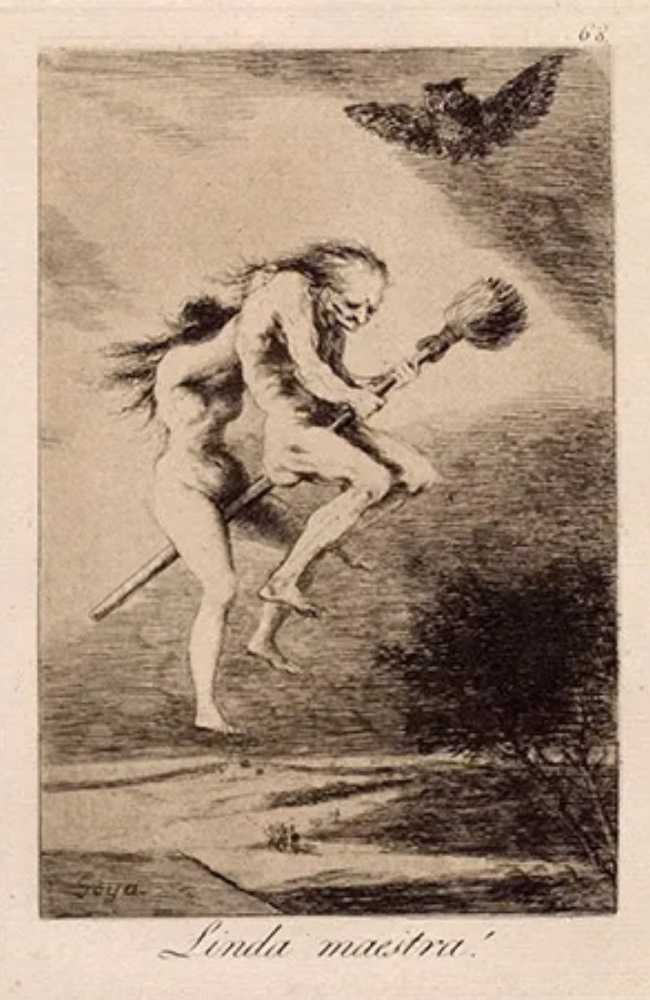
This etching by Spanish artist Francisco Goya depicts an experienced witch teaching a young witch. And as we shall see, if you have a witch, you have multiple witches!
So, who, or what, is a witch then?
The characteristics that define a witch vary depending on who you ask and when or where they are. Most cultures across time had a concept or idea that is akin to our modern definitions of a witch. As such anthropologists and historians have spent much time and effort in trying to narrow down the definition. Scholar Ronald Hutton provides a great definition of a witch in his 2017 work The Witch: A History of Fear, From Ancient Times to the Present. According to Hutton there are 5 defining traits to witches globally, both past and present. They are as follows:
- Someone who works uncanny or non-physical means to cause misfortune or injury to other humans.
- Witches work to harm neighbors and kin over strangers.
- Witches are not isolated or unique experiences; they work with a tradition that is learned and taught.
- Witches work outside socially accept norms.
- Witches can and should be resisted.
Let’s dive into each of these a bit more to provide some meat and understanding.
Someone who works uncanny or non-physical means to cause misfortune or injury to other humans.
The first trait mentioning “uncanny or non-physical means” you might think immediately magic, and you wouldn’t be wrong. However, what is magic and what is religion very much depends on who you ask and who is doing the thing. Wolfgang Behringer points out how some of the traits we associate with witches and other magic users, flying, talking with animals, command of the elements, etc., are also traits that have been associated with Christian saints and Muslim wali.[1] One person’s magic is another’s religion. So, “uncanny or non-physical means” is usually magic, however, we want to be careful in our choice of words.
Witches work to harm neighbors and kin over strangers.
Witches harming neighbors or kin has some important context to consider. First, historically, people rarely traveled far from their place of birth. As such, their social circles were small so it would seem odd and out of place to be concerned with someone 2 towns over! You probably never interacted with those folks, let alone even think about their specific existence! Then alongside that witch hunts were (and when they occur now, still are) an alleviation of stress and concerns about larger scale issues. As such, you’ll vent those angers and take out those frustrations on those around you. Witch accusations follow social lines as Jeffrey B. Russell and Brooks Alexander put it. Witches have to be near you as neighbors or kin because that is the normal person’s world.
Witches are not isolated or unique experiences; they work with a tradition that is learned and taught.
The fact that witches work in a tradition that is learned or taught has massive implications on how witch hunts will then be carried out. Because for a witch to learn they have to learn how to be a witch from another, meaning there are multiple witches present. As mentioned above, since the world was such a local space, that means a town that has a witch must have multiple witches. That alone should help to explain, somewhat, how 50,000 people were executed during this time period. Witches were seen as an infestation, there always had to be more than one.
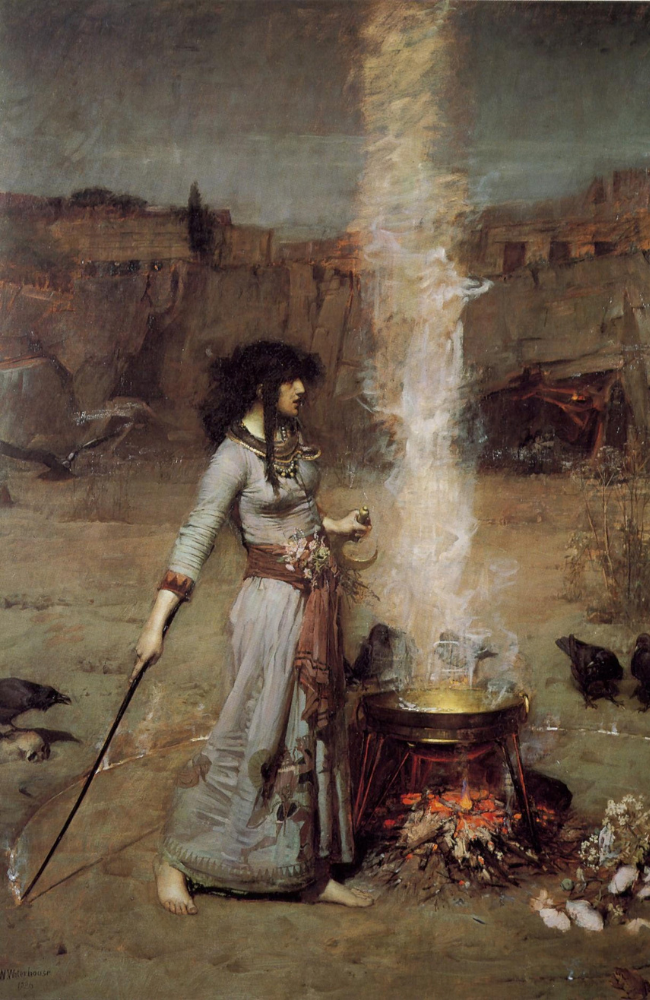
This 1884 painting by English painter John William Waterhouse depicts what appears to be a witch working her magics. A cauldron, circle in the ground, and out in the wilderness, Waterhouse’s painting contains many a stereotypical element of the witch.
Witches work outside socially accept norms.
The fourth element requires a little more broad, historical perspective as well. That witches work outside of socially accepted norms makes them seem akin to tricksters or vigilantes. This characteristic is usually applied when it comes to how the accused handles feuds or rivalries. Every society has acceptable manners in which arguments and disagreements are handled. The witch then goes outside of these norms, however, and used those those previously mentioned and discussed uncanny and non-physical means. Hutton mentions that this is born of an alliance between the witch and the superhuman powers loose in existence. So, while the vigilante might seek their ‘justice’ outside the socially acceptable in the form of prejudicial violence, the witch, likewise, uses hexes and curses to seek their vengeance.
Witches can and should be resisted.
Finally, witches can and should be resisted. This one presents a unique set of interactions. While witches are generally associated with the occult and the supernatural, which therefore may limit how many people see their ability to interact with them, Hutton suggests that a defining trait of the witch is that they can be and should be countered. The ways to accomplish this are generally broad. On a simple level one should call them out in public to force or persuade the witch to lift their curses. If that does not work then take them to court! Plenty of times the damage the witch has laid on the afflicted is the death of a cow or a poor harvest, serious issues to a farming peasant family for sure, but nothing beyond most European legal codes of the time. And of course, the final course of action, and the one that became a common choice in the timeframe we are looking at, violence against the witch.
These characteristics then help to identify witches both historically and in the modern-day. This, however, fails to give us a historical starting point for the witch, and specifically the witches that early modern Europe thought were everywhere. Luckily thanks to an abundance of written records and the extensive work done by historians of this time period we can actually pinpoint when, and where, the idea of the witch as a flier of the night in league with Satan began!
Where was the witch born?
Broadly this idea is born in the Western Alps around 1428. Two historical events that occur a few years before 1428 will meet up in this range and brew together to form our historical witch. The first occurs in Catalonia in northwest Spain in 1424. Leading men were summoned by a local count to deal with a bruxa, a nocturnal demon who eats children, and its human followers. There’s no strong historical record for if the bruxa and its followers were found and prosecuted, however, the characteristics of this demon will come to strongly influence the idea of the witch thanks to the writings of Vincent Ferrer, a priest who was associated with that mission. A similar event occurs in Rome around the same time, which comes to us from a priest named Bernadino.[2]
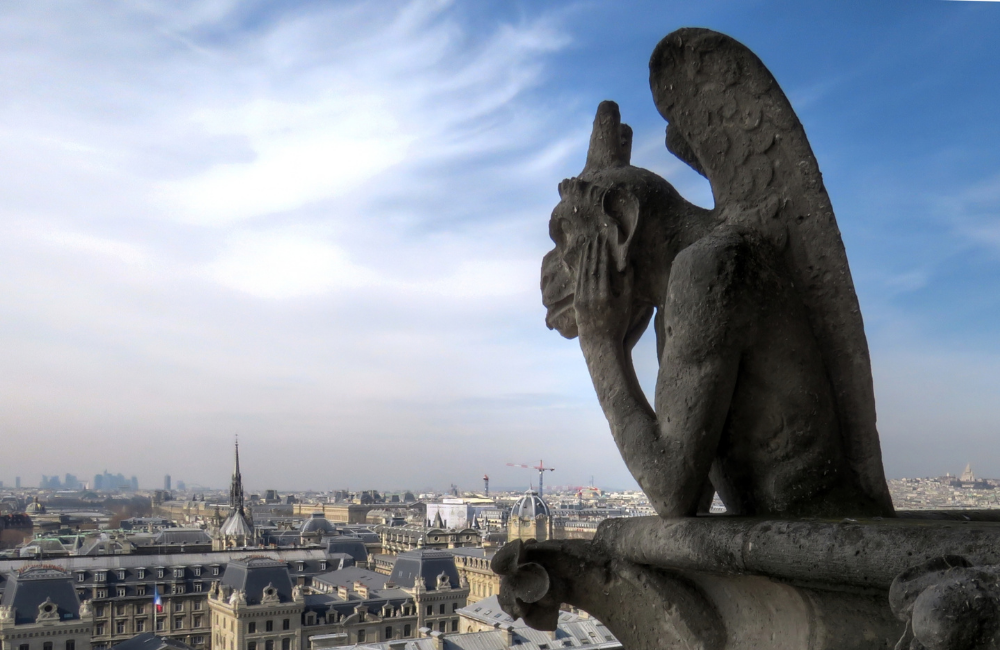
A photo of “Le Stryge” atop Notre-Dame de Paris, from Wiki user Prosthetic Head, based off the Roman creature of mythology. A demon that abducts and eats children!
This type of demon that both events deal with is very important to our understanding of the witch. The Catalans referred to it as the bruxa in their language, but it might be better known by its Latin name, the strix. This creature flew at night and would abduct and eat children. And, as with most pre-Christian creatures and monsters, the strix become a Satanic demon after conversion into Christianity. These characteristics then, Satanic, night flier, and abductor of children, would be passed onto the humans who were thought to accompany the demon and eventually the demon and the human themselves would be fused together into a singular idea.
This also leads to a fun little linguistic fact where we see these names for the demon become the word for witch in many romance languages. Bruixa for example is the modern-day word for witch in Catalan with bruja being the Spanish equivalent and bruxa the Portuguese equivalent. And strega, coming from the Latin strix, being the word for witch in Italian.
Over the course of about 5 years, the Catalan and Roman events will meet up in the western Alps and combine to give us this new idea of the witch. All this solidifies in the ‘failed’ 1431 papal Council of Basel. While the Council has its own issues dealing with the idea of papal supremacy, it also acted as a convention of sorts for various priests and theologians to gather and discuss ‘recent’ happenings. Such as the execution of Joan d’Arc in France for heresy and the strix attacks in Rome and Catalonia. All this talking and mingling allowed the idea of the witch to become solidified and then spread throughout Europe. This will act as the launching board for the rest of Europe to learn of this new Satanic evil.
To recap then, from about 1400 to 1775 around 50,000 men and women are executed for witchcraft in over 100,000 trials. This was born out of multiple large scale systemic changes in the lives of Europeans at the time. We then need a manner in which to identify witches, which luckily Ronald Hutton provided us with 5 traits to use. And lastly, the idea of the witch as an evil night flier associated with Satan was born in the western Alps in the 1430s and would spread all across Europe in the decades to come.
That’s it for this part! Next time we’ll discuss the historical context of what let this idea of the witch become such a craze and killed approximately 50,000 people. After that we’ll conclude with our final part looking at 3 examples and how they tie all these parts together.
